
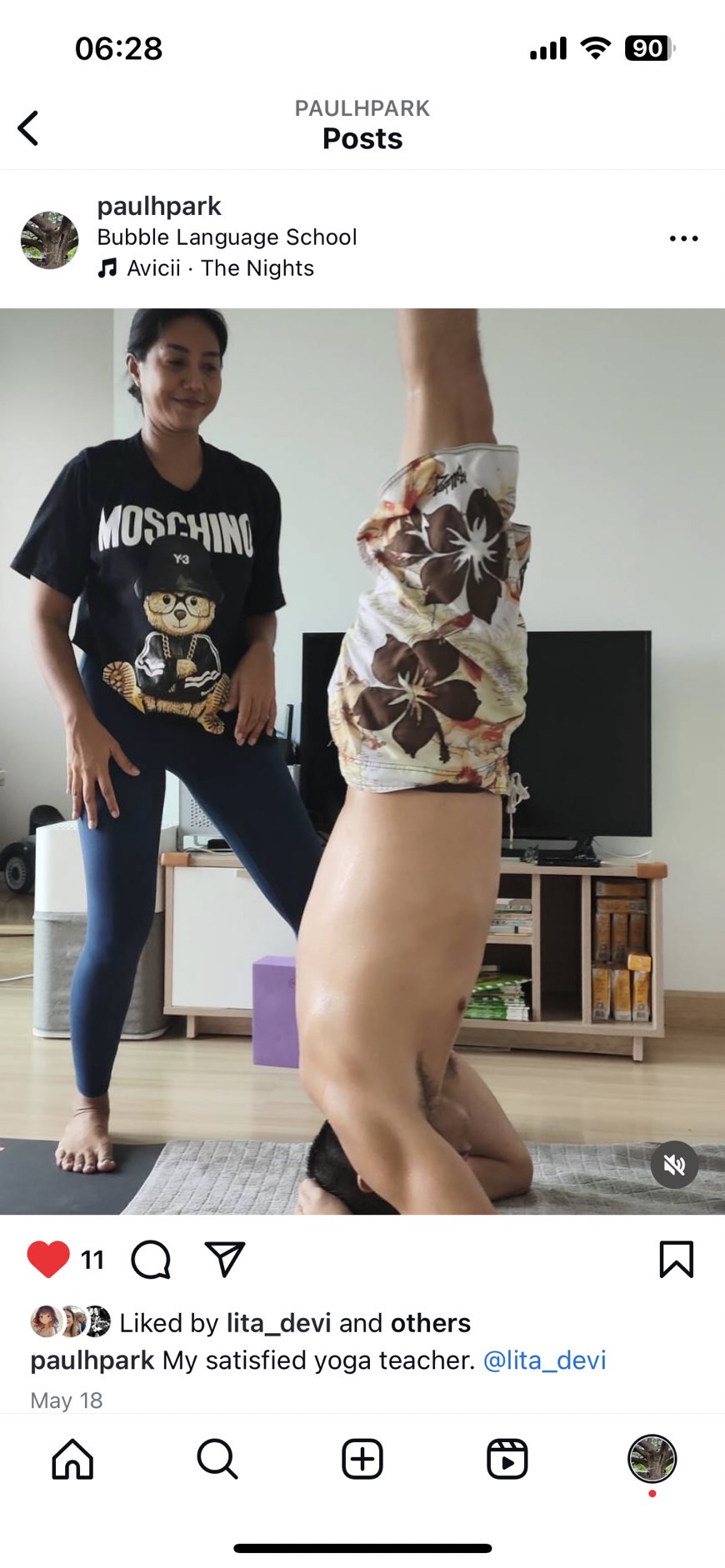
When I first decided to learn how to do a headstand, I knew it wouldn’t be easy. The idea of balancing upside down, relying on my strength and stability, was daunting. But the journey started much more humbly—on my forearms, in a pose called Dolphin.
Week 1: Embracing the Dolphin
My first few days with Dolphin Pose were all about finding my balance and understanding my body’s limits. The pose seemed simple enough: forearms on the mat, hips lifted, walking my feet closer towards my arms. But holding it for even a few breaths left my shoulders trembling. My hamstrings were tight, and I felt like my entire body was resisting the stretch.
By the end of the first week, though, I noticed something small yet significant. My shoulders didn’t fatigue as quickly. It was as if my body had adapted, strengthening itself by just 1%. That small improvement encouraged me, even though I knew there was a long road ahead.
Week 2: Strengthening with Every Breath
As I continued to practice Dolphin Pose daily, I began to feel more stable. My core felt more engaged, and my breath became more synchronized with the movements. I could hold the pose for longer, and that familiar trembling in my shoulders was less intense.
Another 1% improvement in strength was noticeable this week. My muscles felt slightly more pliable, and I was able to inch my feet closer to my elbows without feeling like I was about to collapse. It wasn’t just physical strength that was building; it was mental resilience too. The fear of toppling over slowly started to fade.
Week 3: Finding Flexibility
In the third week, something amazing happened. I felt a newfound flexibility in my hamstrings and shoulders. It wasn’t dramatic—just another 1% increase in range. But that small change made the pose more accessible. I could walk my feet even closer to my arms, bringing my hips higher, which felt like progress toward that elusive headstand.
I also began to notice the subtle ways my muscles were changing. My shoulders didn’t just feel stronger; they felt more supportive. My core was more engaged without conscious effort, and my back muscles began to work in harmony, supporting the entire pose.
Week 4: Building Confidence
With each passing day, my confidence grew alongside my strength. The Dolphin Pose had become a familiar friend—a place where I could feel the cumulative 4% improvement in strength and flexibility. My muscles felt more alive, more useful. They weren’t just going through the motions; they were actively participating in my progress.
I experimented with lifting one leg off the ground, testing my balance and stability. The first few times were wobbly, but I was amazed at how my body responded. The small gains in strength and flexibility were adding up, creating a foundation that felt solid, even upside down.
Week 5: Preparing for Inversion
By the fifth week, I felt ready to start transitioning from Dolphin Pose to a full headstand. My shoulders were no longer the weak point they once were; they had grown stronger by small increments, each day adding a little more capability to the next. My core was solid, and my hamstrings had finally loosened enough to allow me to walk my feet close to my elbows without strain.
That 5% improvement in strength and flexibility had transformed my practice. I was ready to trust my body, to shift my weight forward and lift my legs. The fear that once held me back was now a motivation—each small success along the way had shown me what I was capable of.
The First Attempt: A Glimpse of Victory
My first full headstand attempt wasn’t perfect. I wobbled, and I didn’t hold the pose for long, but I managed to get my legs off the ground. It was a moment of triumph, built on those incremental gains that began with the Dolphin Pose.
As I continue my practice, I know the journey doesn’t end here. Each day, I’ll keep adding that 1%—whether it’s in strength, flexibility, or confidence. And with each step, I’ll move closer to mastering the headstand, feeling my body transform in ways I never imagined possible.
This process has taught me that progress is often slow, but that’s where the beauty lies. Every muscle that loosens, every fraction of strength that grows, every small gain in flexibility—they all add up to something greater. They add up to mastery, not just of a pose, but of my own potential.

Table 1: History of the Headstand Pose (Sirsasana)
| Time Period | Region/Culture | Development and Significance |
|---|---|---|
| Pre-Classical Era (Before 2000 BCE) | Ancient Indus Valley | Early yoga practices, primarily focused on meditation and breath control, began here. There is no direct evidence of the headstand pose, but foundational postures and concepts were developed. |
| Classical Yoga (500 BCE – 800 CE) | India | The Yoga Sutras of Patanjali were written during this time, establishing the Eight Limbs of Yoga. While Sirsasana is not explicitly mentioned, inversions were known in various forms. |
| Medieval Period (800 CE – 1700 CE) | Hatha Yoga Tradition, India | Hatha Yoga texts like the Hatha Yoga Pradipika (15th century) and the Gheranda Samhita (17th century) mention Sirsasana explicitly as a key pose for balancing energy, improving concentration, and spiritual growth. |
| 19th Century | India | Modern yoga pioneers like T. Krishnamacharya started to systematize yoga practices. Sirsasana became widely recognized as a central pose, often referred to as the “King of Asanas” due to its numerous physical and mental benefits. |
| 20th Century | Global | With the globalization of yoga, Sirsasana was popularized by influential figures like B.K.S. Iyengar and Pattabhi Jois. It became a staple in many yoga practices worldwide, symbolizing mastery and balance. |
| 21st Century | Global | The headstand continues to be a significant pose in modern yoga, used not only for its physical benefits but also for its metaphorical representation of overcoming challenges and seeing the world from a different perspective. It remains a marker of advanced practice in many yoga traditions. |
Table 2: Benefits of Mentioned Poses
| Pose | Physical Benefits | Mental/Emotional Benefits |
|---|---|---|
| Dolphin Pose (Ardha Pincha Mayurasana) | Strengthens shoulders, arms, and core; increases flexibility in hamstrings and calves; prepares the body for inversions by building stability. | Improves focus and concentration; reduces stress by calming the mind; enhances body awareness. |
| Headstand (Sirsasana) | Increases blood flow to the brain, improving mental clarity; strengthens shoulders, arms, and core; improves balance and overall body strength; stimulates the lymphatic system. | Boosts confidence and self-discipline; helps relieve stress and anxiety; encourages a new perspective on challenges; enhances concentration and mental stamina. |
These tables provide a comprehensive overview of the history and benefits of the headstand and associated poses, offering both historical context and practical insights.
Precautions and Contraindications:
- Neck and Spine Issues: Due to the pressure placed on the cervical spine, individuals with neck injuries or spinal problems should avoid or modify this pose.
- High or Low Blood Pressure: The sudden change in blood flow can be risky; consult with a healthcare professional before attempting.
- Heart Conditions: Those with cardiovascular issues should practice caution due to the increased demands on the heart.
- Eye Conditions: Inversions can increase intraocular pressure; individuals with glaucoma or retinal issues should avoid this pose.
- Pregnancy: Should be practiced only with prior experience and under expert guidance during pregnancy.
- Proper Technique: It’s crucial to learn and perform the headstand with correct alignment to prevent injury; beginners should practice under the supervision of a qualified instructor.
Scientific Analysis of Dolphin Pose and Headstand
Dolphin Pose (Ardha Pincha Mayurasana)
1. Muscle Engagement and Strength Building: Dolphin Pose primarily targets the shoulder girdle, upper back, core, and legs. Scientifically, it activates the deltoids, trapezius, and latissimus dorsi muscles, which are essential for building upper body strength and stability. Additionally, the core, including the rectus abdominis and obliques, is engaged to maintain balance, creating a solid foundation for the pose.
- Shoulder and Upper Body Strength: The weight placed on the forearms, shoulders, and upper back builds strength and endurance in these areas. Continuous practice helps improve the shoulder joint’s stability and mobility, which is essential for safe progression toward headstands and other advanced inversions.
- Flexibility and Range of Motion: Dolphin Pose stretches the hamstrings, calves, and lower back. By increasing the posterior chain’s flexibility (especially in the hamstrings), practitioners can improve their overall mobility, making it easier to transition into more advanced poses like the headstand.
2. Cardiovascular and Respiratory System Benefits: While not as strenuous as more dynamic poses, Dolphin Pose still engages the cardiovascular system by requiring focus on deep, controlled breathing. This encourages increased lung capacity and better oxygenation of the body, which is key in supporting endurance and reducing fatigue during practice.
Headstand (Sirsasana)
1. Blood Circulation and Cardiovascular System: Inversions like the headstand cause a redistribution of blood flow. By flipping the body upside down, gravity assists in moving blood toward the brain, heart, and upper body. This temporary increase in blood flow to the brain has been shown to improve mental clarity, focus, and cognitive function.
- Improved Venous Return: The headstand enhances venous return, which refers to the body’s ability to return deoxygenated blood back to the heart. Inversions can reduce pressure on the veins, helping with circulation and potentially decreasing varicose veins over time.
2. Core and Postural Muscle Activation: The headstand requires significant core engagement, particularly from the transverse abdominis, the deeper stabilizing muscles that provide balance and support. The erector spinae and other postural muscles are activated to maintain the upright position of the spine, ensuring that the body does not collapse under its own weight.
- Proprioception and Body Awareness: The headstand enhances proprioception, the body’s ability to sense its position in space. This is crucial in developing better coordination and balance, which improves overall athletic performance and reduces the risk of injury.
3. Nervous System and Endocrine System Impact: Inversions like the headstand stimulate the parasympathetic nervous system, which helps in stress relief and relaxation. Additionally, headstands may influence the pituitary and pineal glands, which are located in the brain. Though more research is needed, yogic practitioners often claim that headstands can positively affect hormone regulation and balance due to this increased blood flow to the brain.
Conclusion: The Journey to Mastering Inversions
Learning how to do a headstand is not just a physical challenge but a mental and emotional journey. Starting from the foundational Dolphin Pose, practitioners gradually build the strength, flexibility, and mental resilience required to safely execute a full headstand. Dolphin Pose acts as the training ground, developing core stability, shoulder strength, and hamstring flexibility over time. The incremental improvements in strength and range—just 1% each week—add up, creating a stable foundation for the headstand.
From a scientific perspective, both Dolphin Pose and Headstand offer profound benefits to the body and mind. Dolphin Pose strengthens the upper body and core while increasing flexibility, making it ideal for those preparing for inversions. Headstands, on the other hand, offer a unique combination of improved circulation, enhanced proprioception, and the activation of stabilizing muscles that support balance and alignment.
Mastering the headstand is more than achieving a physical posture. It represents overcoming mental blocks, building patience, and cultivating a deeper awareness of the body’s potential. As your muscles grow, stretch, and adapt, so too does your confidence. The journey may take time, but every 1% improvement brings you closer to a new perspective—both physically and metaphorically.
In yoga, as in life, progress comes slowly but surely, and the rewards are always worth the effort.
Leave a Reply